By BS Daily UK | Lifestyle
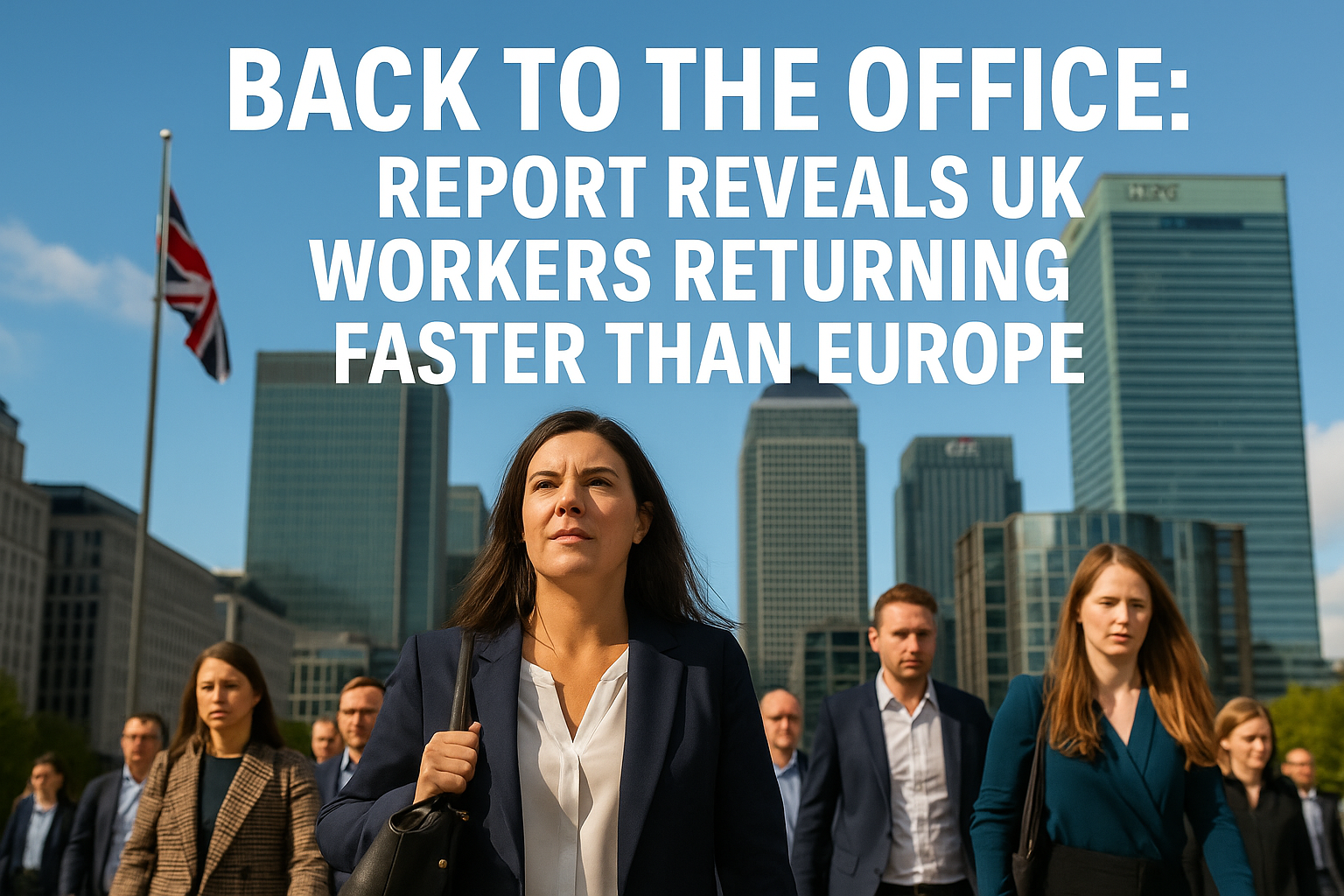
A new international report has revealed that the UK is seeing one of the fastest returns to office working anywhere in Europe — a trend that is surprising employers, worrying some workers, and sparking fresh debate about the future of hybrid work.
While many European countries continue to favour a long-term blend of remote and office life, the UK is moving sharply in the opposite direction, with more staff expected to attend the workplace three to four days per week heading into 2025.
The shift is shaping the future of commuting, city centres, and work-life balance across the country.
📊 The Report: UK Ahead of Europe in Office Attendance
According to new research by the Global Workplace Insights Network:
- 76% of UK office workers now attend in person at least 3 days a week
- Compared with:
- France: 58%
- Germany: 52%
- Spain: 49%
- Netherlands: 46%
The UK’s return-to-office rate is the highest in Western Europe, driven by employer pressure, job market competition, and concerns about productivity.
🏢 What’s Driving the UK’s Faster Return to Work?
Analysts point to several key reasons:
✔ Employer Demand
UK companies — especially banks, tech firms, and consultancies — are pushing for more structure, collaboration, and oversight.
✔ Productivity Concerns
Some business leaders claim fully remote workers are less productive or less engaged.
✔ Economic Uncertainty
With competition for jobs increasing, many workers feel safer being visible at work.
✔ Cultural Differences
Experts say British work culture places more emphasis on office presence compared to many European countries.
🧑💻 What UK Workers Are Saying
BS Daily UK spoke with employees across London, Manchester, and Glasgow.
The responses show a wide mix of emotions:
👍 “I missed the buzz.”
😐 “Hybrid is fine — but not 4 days a week.”
😡 “Feels like we’re going backwards.”
🤯 “Commute costs make it painful.”
Many workers support 2 days in the office, but feel 4 days is too much — especially with rising travel and childcare expenses.
One worker in Canary Wharf told:
“They say the office helps productivity. But spending £300 a month on trains isn’t exactly motivating.”
🚆 Impact on Cities, Transport & Local Businesses
The return to office life has boosted:
- Train and bus passenger numbers
- Coffee shops and lunch spots
- High street footfall
- Business district activity
But it has also caused:
- Higher commuting costs
- More traffic congestion
- Longer travel times
- Pressure on childcare schedules
City centres are recovering — but it’s a mixed picture for workers.
🏠 The Hybrid Battle Continues
Despite the rise in office attendance, hybrid work remains popular:
- 1 in 3 workers still want mostly remote work
- 1 in 4 feel pressured to come in more than necessary
- 1 in 5 say hybrid arrangements are constantly changing
Workplace experts warn that companies enforcing strict return policies risk losing talent — especially younger employees.
Professor Linda Casewell told :
“The shift back to the office is real, but so is worker fatigue.
Employers need balance, not rigid rules.”
🔮 What the Trend Means for 2025
Analysts predict:
✔ UK will remain one of the most office-focused economies in Europe
✔ Hybrid work will not disappear — but will stabilise at 2–3 days per week
✔ Companies resisting flexibility may face recruitment challenges
✔ Rising transport costs will shape future work policies
✔ Digital tools will continue to expand remote options
The return to office life is clearly underway — but the debate over how much office workers really need remains far from settled.
📌 BS Daily UK Summary
- UK workers are returning to the office faster than Europeans
- Employer pressure and economic concerns drive the trend
- Workers report mixed feelings — cost, culture, and convenience matter
- Hybrid work is still widely preferred
- The balance between office and home working is still evolving