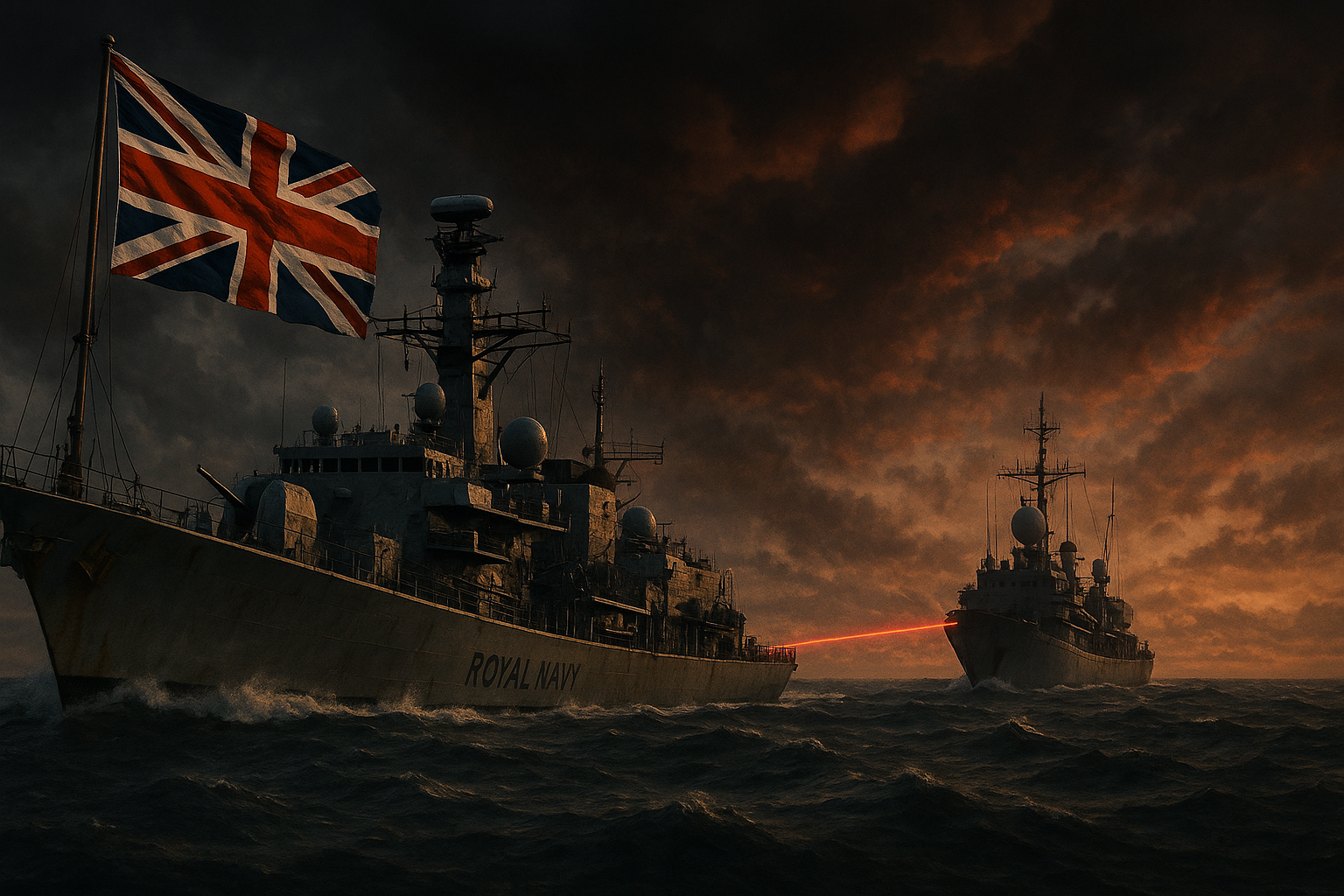
UK Raises Maritime Alarm Over Russian Spy Ship’s Laser Incident
LONDON — The UK government is signalling a new level of maritime readiness after accusing the Russian ship Yantar of targeting RAF aircraft with military-grade lasers during surveillance operations in the North Sea.
On November 19, Defence Secretary John Healey declared that “military options” are on the table should the vessel’s behaviour escalate. Reuters
“The directing of lasers at RAF pilots is deeply dangerous,” Healey said in a statement from No 9 Downing Street. He confirmed that the Royal Navy’s rules of engagement have been amended to allow for closer shadowing and monitoring of the Yantar when in UK waters. Reuters
What Happened: Yantar’s Provocative Actions
According to UK sources, the Yantar, a Russian intelligence ship designed for under-sea cable mapping and data-gathering, has been operating off Scotland’s coast inside the UK’s exclusive economic zone (EEZ). British defence officials say that during routine monitoring, one RAF surveillance aircraft encountered the Yantar and was deliberately illuminated by laser beams. Reuters+1
“We have changed the navy’s rules of engagement so we can follow more closely … the activities of the Yantar when it’s in our wider waters,” Healey told reporters. Reuters
The Russian embassy in London dismissed the allegations, calling them “Russophobic” and insisting its ship’s operations were benign. It urged the UK to avoid “destructive steps that exacerbate the crisis”. Reuters
Strategic Significance: Why the UK Is Reacting Strongly
The incident comes amid heightened tensions in northern waters where NATO and partner nations monitor Russian naval movements closely. Analysts say that the Yantar’s capabilities—particularly its ability to deploy submersibles to inspect under-sea cables—make the ship a major strategic concern for the UK, given the country’s reliance on submarine infrastructure for communications, energy and defence.
By publicly accusing Moscow and preparing for potential military response, the UK is signalling a shift from observation to deterrence. “We are ready to act not just watch,” is the message being sent.
UK Defence Strategy: From Shadowing to Confrontation
As part of the response, the Royal Navy has reportedly dispatched surface and submarine assets to track the Yantar’s movements more closely. Healey also stated that surveillance and air-patrol operations have been increased and that the rules of engagement have been tightened so that the ship cannot easily evade monitoring.
The shift to a more confrontational posture reflects the UK’s commitment to defending its maritime boundaries and under-sea infrastructure. Defence analysts note this may involve unmanned underwater vehicles (UUVs) in the near future or more aggressive interception of suspected intelligence vessels.
Russian Reaction & Diplomatic Fallout
Moscow responded through its London embassy and external affairs ministry, categorically denying any hostile intent. “Our country’s actions do not affect the interests of the United Kingdom and are not aimed at undermining its security. We are not interested in British underwater communications,” the embassy said. Reuters
Though still early, the incident is expected to trigger diplomatic exchanges at high levels, including within NATO frameworks and bilateral UK-Russia channels. Britain’s allies will be watching to see whether UK deterrence yields changes in Russian maritime behaviour.
Why This Matters: Implications for Security & Defence
- Under-sea infrastructure vulnerability: With more than 90 % of UK international data transmitted via under-sea cables, monitoring vessels like the Yantar are viewed as strategic threats.
- Maritime deterrence: The switch from passive shadowing to readiness signals a change in UK defence posture, likely with broader NATO implications.
- Hybrid warfare escalation: Laser‐use against aircraft, under-sea cable surveillance and grey-zone operations point to modern maritime conflict beyond conventional naval combat.
- Domestic defence politics: The incident gives the UK government a rallying point as it pursues increased defence funding and maritime capability expansion.
What Happens Next?
Short-term, the UK will likely maintain heightened naval and air presence in the northern waters, especially around known routes and areas where the Yantar operates. Intelligence tracking will intensify, and rules of engagement are set to remain stringent.
In the medium term, Britain may push for allied cooperation to monitor under-sea threats, expand budgets for maritime defence and invest in advanced detection or UUV systems. Diplomatically, Moscow’s next move will be closely watched—either a retaliatory show of force or a more cautious stance depending on UK responses.
Final Thoughts
By publicly accusing its long-term adversary Russia of a direct provocation and preparing for military options, the UK is sending a clear message: maritime security, especially beneath the waves, is non-negotiable. The Yantar incident may be the tip of a much larger iceberg in terms of hybrid naval threats and UK responses in the Indo-Atlantic theatre.
The question now is not just whether this one ship can be deterred — but whether Britain and its allies are ready for a broader maritime standoff.