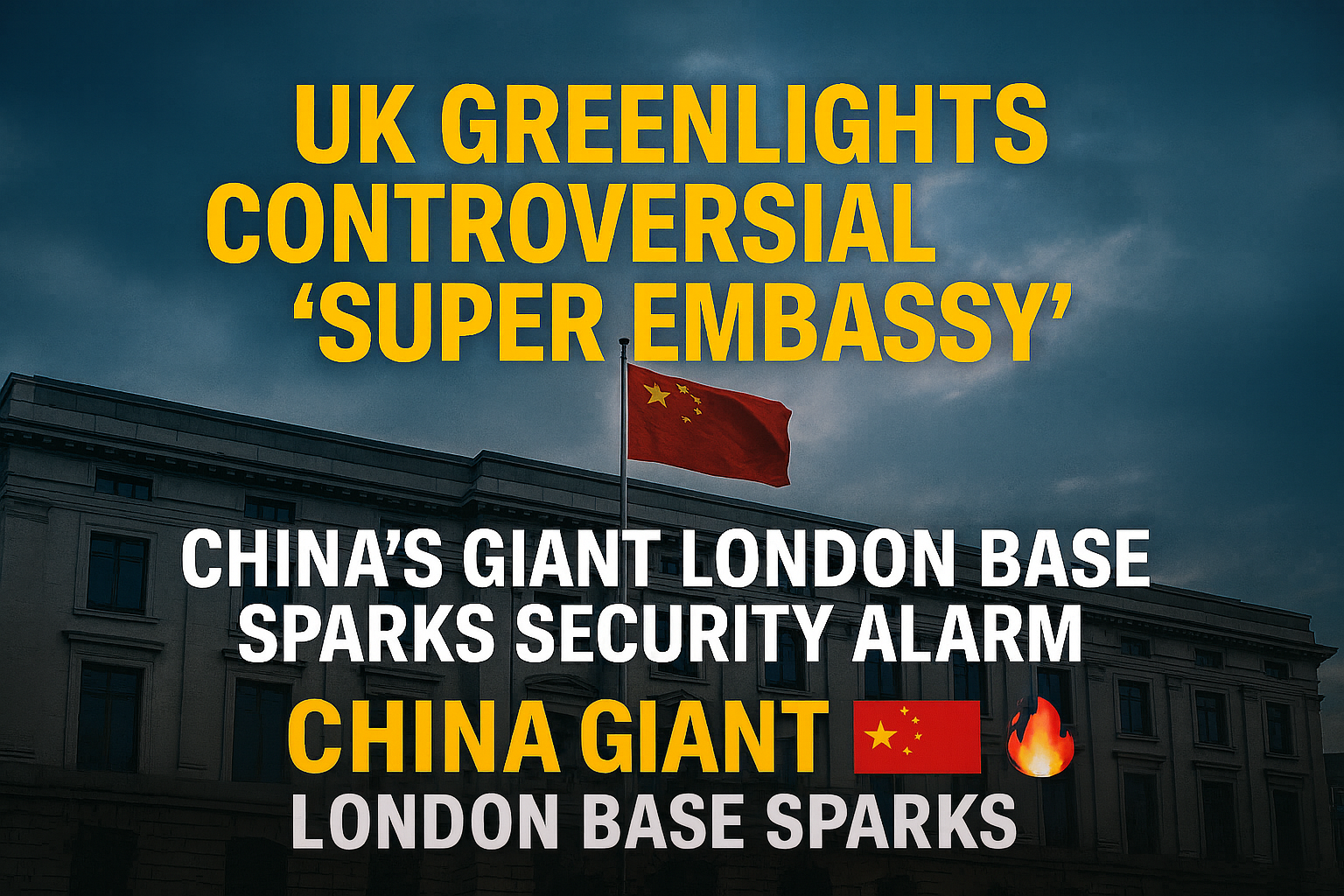
The UK government is preparing to approve plans for a vast new Chinese embassy complex in the heart of London, a move that has triggered intense debate within Westminster, the intelligence community, and local residents. The proposed “super embassy” — expected to become one of China’s largest diplomatic sites in Europe — has raised questions about national security, surveillance risks, geopolitical tensions, and the future of UK-China relations.
A Long-Running Proposal Now Back on Track
The Chinese government has been attempting to establish the new embassy at the former Royal Mint site in Tower Hamlets for several years. Earlier proposals were delayed after the local council blocked the project in 2022, citing issues around public safety, traffic disruption, transport pressures, and concerns raised by residents.
However, recent reporting indicates that the UK government is now prepared to overrule local objections and greenlight the project. Officials argue that blocking China’s diplomatic presence could damage already strained relations and undermine Britain’s international commitments to providing adequate embassy infrastructure for foreign nations.
With Downing Street signalling its intent to push the project forward, the new embassy could soon move from years of stagnation to the final approval stages.
Why the Embassy Is So Controversial
The scale of the proposed Chinese diplomatic compound is unprecedented. The site spans more than 20,000 square meters, large enough to accommodate hundreds of staff, intelligence personnel, cultural offices, and security services. Critics argue that the facility could be used for:
- Enhanced intelligence gathering
- Monitoring of Chinese nationals in the UK
- Diplomatic influence operations
- Cyberactivity and communications interception
Security experts have warned that allowing such a large, centralised Chinese presence so close to major London infrastructure may present strategic vulnerabilities. The proximity to transport hubs, residential neighbourhoods, and sensitive government buildings has been repeatedly flagged.
Some analysts describe the project as “a potential intelligence goldmine” for Beijing if not tightly monitored.
Local Resistance and Human Rights Concerns
Residents of the surrounding areas — particularly in Tower Hamlets — have voiced strong concerns over the years. Many fear that local protests, especially those involving Hong Kong activists, Uyghur groups, and critics of the Chinese Communist Party, would be surveyed or intimidated by embassy security personnel.
Members of the UK’s Hong Kong diaspora, now numbering hundreds of thousands due to the British National (Overseas) visa route, have been especially vocal. They warn that the embassy’s establishment could embolden transnational repression tactics, including:
- Recording of demonstrators
- Gathering of personal data
- Pressure placed on relatives remaining in China or Hong Kong
Human rights organisations have repeatedly urged the UK government to think carefully before enabling China to build a diplomatic compound of such scale without additional safeguards.
Government Argument: Diplomatic Obligations and Stability
Despite the intense criticism, the UK government appears determined to move forward.
Officials argue that:
- The UK must adhere to its diplomatic obligations under the Vienna Convention, providing space for foreign missions.
- Blocking the project could spark a diplomatic retaliation from China, further damaging economic and strategic ties.
- Approving the embassy maintains consistency with global diplomatic norms, given that the UK operates its own large-scale facilities abroad.
Additionally, some senior figures believe that permitting the embassy could prevent China from interpreting the UK’s stance as outright hostility — particularly during an already tense geopolitical environment.
Strategic Balancing: UK Security vs. International Diplomacy
The embassy decision highlights the broader challenge facing British foreign policy: how to balance engagement with China while protecting national security and democratic values.
The UK has already:
- Restricted Chinese involvement in 5G networks
- Tightened rules on foreign ownership of critical infrastructure
- Issued warnings about espionage and interference activities
- Increased scrutiny on Confucius Institutes
- Strengthened alliances with Indo-Pacific partners like Japan and Australia
Approving the embassy while enforcing stricter security oversight appears to be the compromise Westminster is aiming for — though critics argue that this approach is insufficient.
What Happens Next?
The proposed embassy is now expected to re-enter planning discussions before final government approval. If greenlit, construction could begin within the next couple of years, transforming the historic Royal Mint site into one of the most influential Chinese diplomatic hubs in the Western world.
However, the political battle is far from over. Conservative MPs, Labour backbenchers, local councillors, and security analysts are demanding:
- Stronger parliamentary oversight
- A national security impact assessment
- Strict limits on surveillance equipment
- Transparent communication with local communities
As the debate intensifies, the embassy plan is quickly becoming a symbol of how the UK navigates modern geopolitical power struggles.
SEO Meta Description (Optimized, 155–160 characters)
The UK is set to approve China’s massive new London embassy despite security concerns, sparking debate over surveillance risks, diplomacy, and national strategy.