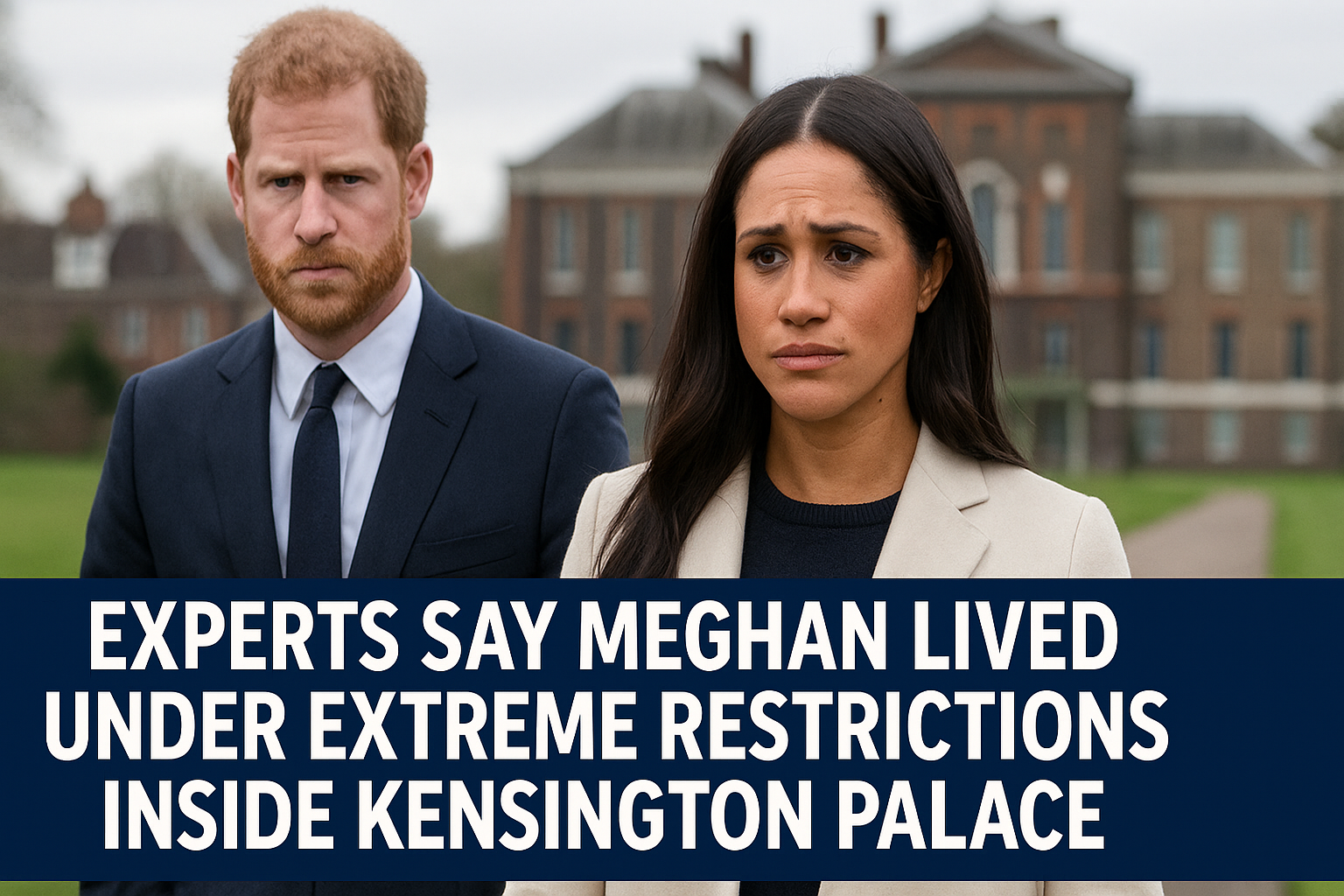
For years, Kensington Palace has been portrayed as a symbol of royal luxury — a historic residence draped in prestige, tradition and the timeless glamour of the British monarchy. But new commentary from royal experts paints a far more restrictive reality behind the palace gates, suggesting that Meghan Markle’s early life as a senior royal was defined not by privilege, but by intense control, emotional pressure and a lack of personal freedom.
While Meghan herself never used the phrase “prison,” experts analysing her public interviews, insider accounts and the structural expectations of royal life argue that the environment around her was far more restrictive than the public ever realised.
A Life of Strict Control Behind the Palace Walls
According to multiple royal commentators, Meghan experienced a level of personal and institutional control that went far deeper than what modern royals typically reveal. The Duke and Duchess of Sussex lived at Nottingham Cottage — a modest residence within Kensington Palace grounds — but their physical location mattered far less than the rules that governed their everyday life.
Experts say Meghan’s schedule, public appearances and even her personal movements were tightly controlled.
During her 2021 interview with Oprah Winfrey, Meghan revealed that she was asked to stay inside the palace for extended periods to avoid appearing “overexposed”. At one point, she said she had gone months without being allowed to leave, despite asking to meet friends or simply go out for lunch.
Royal analysts argue that these limitations created a sense of isolation that intensified the pressure she was already under as a newcomer marrying into a centuries-old institution.
Restrictions on Identity, Communication and Independence
One of the most discussed revelations from Meghan came when she said she had her passport, driving licence and personal documents taken when she entered the royal system. While this is a security measure applied to some senior royals, experts note that it symbolically reflects the loss of independence that accompanies royal life.
Several analysts believe this level of control hit Meghan particularly hard given her previous life: a successful actress, humanitarian figure and someone accustomed to personal autonomy. Royal specialists argue that transitioning from an independent public figure to a highly restricted royal was a shock unlike anything she experienced before.
Even communication became a major issue. Meghan said she struggled to get mental health support, despite reaching out internally. Experts suggest that institutional barriers prevented her from receiving the help she needed — a claim that has intensified debates about palace culture and its treatment of modern royals.
Media Pressure Took the Situation From Difficult to “Unbearable”
Outside the palace walls, relentless media scrutiny amplified the emotional toll of Meghan’s restricted life. Experts argue that palace advisors failed to adapt to the scale and tone of online hostility directed toward the Duchess.
Unlike previous royal women, Meghan faced an unprecedented mix of social media abuse, tabloid attacks, racial undertones and conspiracy-driven narratives. With Meghan kept inside the palace for “her own protection,” analysts say the combination of isolation and negative press created a perfect storm.
Several specialists have described the environment as “emotionally suffocating” — a far cry from the public perception of glamorous royal living.
Insiders Suggest Meghan Felt “Cut Off” From Normal Life
Former palace aides and commentators insist that much of the isolation Meghan described is consistent with the rigid structures that govern royal life. But Meghan’s situation was worsened by:
- Her rapid transition into senior royal duties
- Her American upbringing and lack of royal exposure
- Her status as a biracial woman in the spotlight
- Her prior independent career
- The media’s aggressive coverage
- Limited internal support networks
Experts say these factors combined to create an environment that would feel “extreme” to anyone, let alone a newly married woman adjusting to the world’s most public family.
Why Experts Call It “Extreme Restrictions” — Not Exaggeration
The phrase “extreme restrictions” isn’t meant to sensationalise — analysts argue it accurately reflects how different the royal system is from normal modern life.
Senior royals cannot:
- Go out without scheduling it through security
- Use social media freely
- Travel without approval
- Respond to press stories
- Seek medical treatment without protocol
- Appear in public too frequently
- Engage in spontaneous activities
For Meghan, who had never lived with such constraints, experts say the shift was dramatic enough to be overwhelming.
The Broader Royal Debate: Tradition vs. Modern Reality
Meghan’s experience continues to spark global conversation about whether the monarchy can function under the same rules it used decades ago. Experts argue that the institution is struggling to adapt to modern expectations around mental health, autonomy, diversity and transparency.
For many royal watchers, Meghan’s struggles inside Kensington Palace highlight a deeper issue: the monarchy’s resistance to change may be pushing away the very people capable of helping it evolve.
Final Thoughts
Though Meghan never described Kensington Palace as a “prison,” experts maintain she lived under exceptional pressure, strict rules and institutional constraints that deeply affected her wellbeing.
Her experience — now widely analysed by royal commentators — paints a sobering picture of what life behind royal walls can really be like, far removed from the grandeur seen in public.
As debates continue about the future of the monarchy, Meghan’s story remains one of the most powerful case studies of the challenges facing the modern Royal Family.