A Nation on Hold
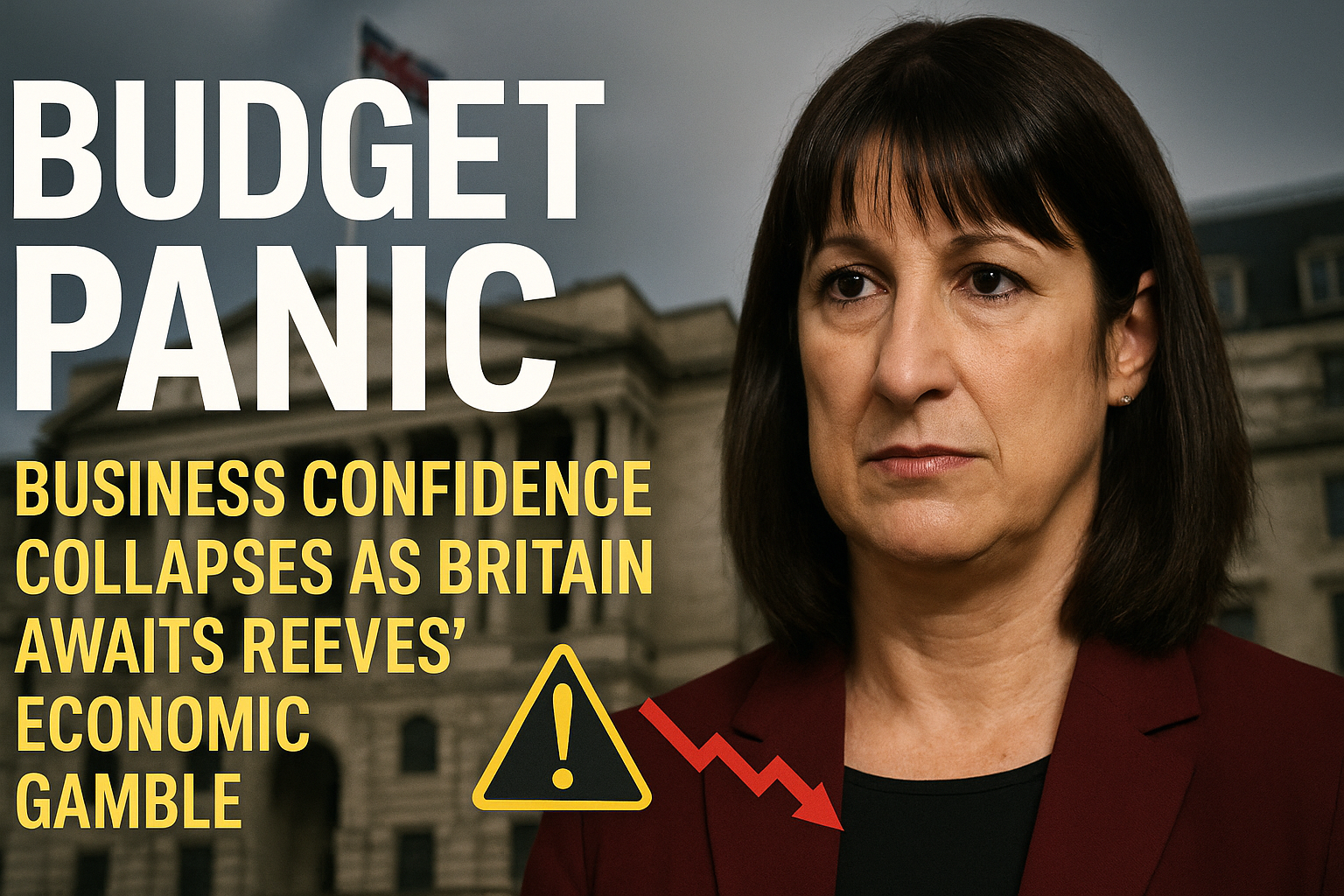
Major UK businesses and SMEs are hitting the pause button. With the next fiscal statement approaching fast, a fresh wave of uncertainty is rippling through boardrooms across Britain. A new survey from the British Chambers of Commerce (BCC) found that only 48 % of firms expect turnover to grow in the next 12 months — down from 58 % at the beginning of 2024. British Chambers of Commerce Meanwhile, according to the Institute for Chartered Accountants in England & Wales, business confidence has fallen to its lowest point since the end of 2022. The Scottish Sun
What’s Fueling the Freeze
This slump is not simply about weak data. Analysts point to policy drift, unclear tax signals and a protracted build-up to the next budget as the real culprits.
“Domestic policy uncertainty has also played a significant role … it seems unable to balance taxation with public-sector spending.” — Prof John Bryson, University of Birmingham chinadailyasia.com
A piece in the Financial Times warns that UK business blames the long run-up to the budget for fuelling uncertainty and slowing investment decisions. Financial Times
Firms Holding Back
Business owners and investors are increasingly asking: Should we commit to Britain now? The answer, so far, appears to be to wait.
- 59 % of the firms surveyed by the BCC said taxation was their top concern. British Chambers of Commerce
- Inflation, regaining a prominent spot at 57 %, ties with tax as a key worry. British Chambers of Commerce
- Among smaller firms, nearly one-third expect either to downsize, exit or sell in the next year. The Business Times
- The broader economy is struggling: in the third quarter real GDP rose only 0.1 %, reinforcing the weak outlook. Xinhua News+1
The Stakes for the Chancellor
Rachel Reeves, Chancellor of the Exchequer, faces what many describe as a make-or-break fiscal statement. With limited fiscal headroom and little appetite among respondents for further tax hikes or spending cuts, the next Budget must deliver clarity and growth.
Analysts warn that the government’s so-called “fiscal trilemma” — balancing a return to surplus, protecting services and avoiding tax rises on households — cannot be resolved easily. British Chambers of Commerce+1
Road to the Budget
The autumn Budget is scheduled for 26 November. Firms appear to be holding off investment decisions until the government sets a clearer direction.
Markets are watching for three key signals:
- Tax certainty — Are business-tax burdens going up or down?
- Spending clarity — What is the long-term plan for public services and infrastructure?
- Growth commitment — Are the tools in place to revive stagnating productivity and domestic demand?
Impact on Everyday Britain
While these concerns originate in the boardroom, they may ripple into daily life:
- Slow business growth = fewer new jobs = weaker wage growth
- Delayed investment = less equipment, fewer upgrades = potential competitiveness loss
- Budget uncertainty = cautious households = weaker consumer spending
All of which may form a drag on the UK economy for months.
What to Watch
- Surprise tax announcements: A change of tone on tax could trigger a rebound in business sentiment.
- Corporate‐investment data: Look out for capex announcements as signals of confidence returning.
- Interest rates and borrowing costs: If borrowing costs rise for companies, that adds another layer of pressure.
Bottom Line
In short: Britain’s businesses are sitting on the sidelines, awaiting direction. The message is clear — confidence won’t reignite until the government offers coherent, reliable signals. With investment stalling and sentiment sliding, the next Budget isn’t just another fiscal event — it might be the line in the sand for the country’s growth prospects.