Early Winter Arrives
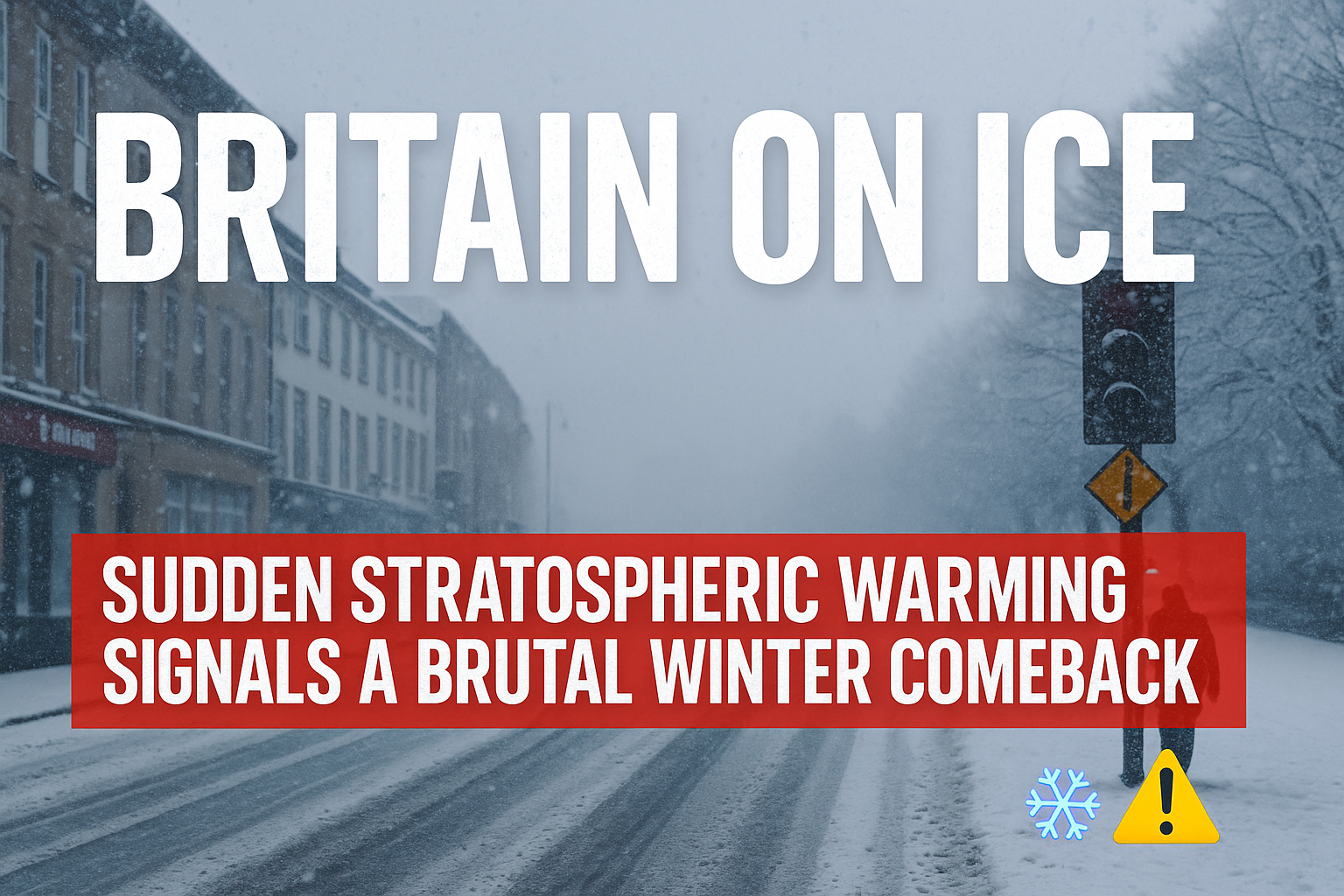
The Met Office has declared that “winter has arrived early across the UK”, as Arctic air already sweeps in with a mix of ice, sleet and snow warnings. Met Office+1
Temperatures have plunged: for example, in the Scottish Highlands at Loch Glascarnoch the mercury dropped to -11.7 °C recently. The Independent
What’s Behind It: Sudden Stratospheric Warming (SSW)
Meteorologists are tracking signs of a major atmospheric shift known as a Sudden Stratospheric Warming (SSW). This phenomenon occurs when the stratosphere (10–50 km up) rapidly warms, disrupting the polar vortex and allowing cold Arctic air to spill south. NationalWorld+2Reteuro.co.uk+2
In this case, modelling suggests about a 70% chance that an SSW will result in a colder-than-average spell for the UK within 10 to 14 days. The Independent+1
Why This One Matters
What makes the current signal noteworthy:
- It’s unusually early in the season for such a strong SSW influence. Reteuro.co.uk+1
- This same mechanism helped trigger the infamous “Beast from the East” freeze of February 2018, which brought heavy snow and intense cold to the UK. The Independent+1
- While an SSW doesn’t guarantee extreme weather at ground level, it significantly ups the odds of a prolonged cold and snowy pattern. NationalWorld+1
What’s Coming Next
In the short term: a temporary milder spell as Atlantic systems push in, bringing rain and wind. However, forecasters warn this may be just a brief lull. The Independent+1
Looking ahead: if the SSW proceeds as the models suggest, expect:
- A shift to easterly/northeasterly winds carrying cold air from Siberia/Arctic regions
- Increased likelihood of snow or icy conditions, especially in northern and elevated areas
- Greater demand on heating, potential travel disruption, icy roads and localised power issues
- A colder December than average, with “dry-run” warning signs already appearing. Sky News+1
Regions at Risk
While no region is immune, the most vulnerable zones include:
- Northern Scotland and upland areas (higher snow risk) Met Office
- Northern England & Yorkshire Wolds — facing earlier snow warnings Met Office+1
- Areas with existing ice warnings should keep alert for secondary cold snap risk
What You Should Do Now
- Stay updated: Check alerts via Met Office and local councils
- Prepare for cold & ice: Ensure heating systems are working, check insulation, stock up on basic provisions
- Travel smart: Give yourself extra time for journeys, plan alternate routes, check weather/road updates
- Engage your audience: For social-media creators, this is an opportunity — think cold-weather tips, polls (“Are you ready for the freeze?”), travel disruption warnings, fun “winter survival” content
- Be cautious: Don’t rely on Snowmageddon headlines just yet — the event is likely but not guaranteed. The pattern is clear, but details are still unfolding.