A Grim Holiday Outlook
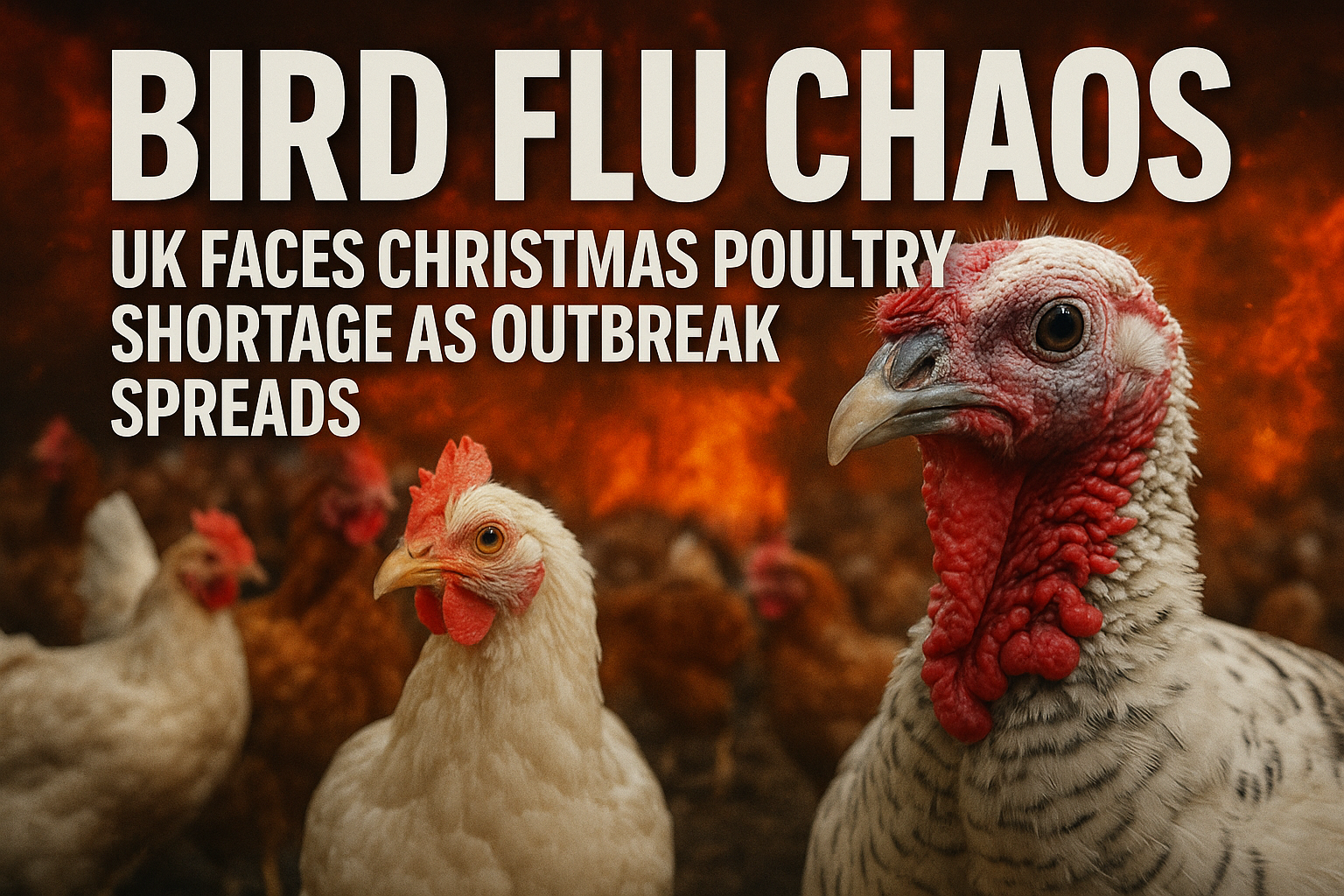
As the festive season rapidly approaches, the UK’s poultry industry is sounding the alarm. A worsening outbreak of Avian influenza (bird flu) is denting the supply of turkeys, chickens and ducks ahead of Christmas. According to recent figures, around 5 % of the UK’s Christmas-poultry flock — approximately 300,000 birds — have already been culled this season. The Guardian+1
Industry executives are warning that organic and free-range producers are among the hardest hit, and while large retailers may still fulfil orders due to locked-in supplier deals, smaller suppliers and niche producers are expected to struggle or raise prices. The Guardian+1
Why the Outbreak Is Worst in Years
Several factors are driving the crisis:
- The outbreak began unusually early — this season’s first confirmed UK cases emerged in October, with rapid escalation. ITVX+1
- In response, the UK government extended a nationwide housing order: all poultry in England must be kept indoors from 6 November. Reuters+1
- The virus is spreading via wild-bird migrations and high-density commercial flocks, meaning strict biosecurity is being stressed. Reuters+1
- Free-range and organic farms are disproportionately vulnerable because birds spend more time outside and may interact with wild birds. One farm in west Wales had 48,000 turkeys culled. The Guardian
What This Means for Christmas Tables
The timing could not be worse. The weeks leading up to Christmas are peak production for turkeys and festive poultry. With supply squeezed, several consequences may follow:
- Price hikes: Smaller producers may pass increased costs or losses onto retailers and consumers.
- Reduced choices: Premium or free-range turkeys might be harder to find, pushing shoppers toward more standard or imported options.
- Supply chain stress: Processors may start harvesting birds earlier or in different batches to limit exposure, which affects size, quality and timing. The Guardian
- Retail disruption: Although major chains have strong supply deals, independent butchers and small outlets may struggle to source birds. The Guardian
Government & Industry Response
The government has ramped up disease-control measures:
- A full-England housing order for flocks is now in force, backed by the Animal and Plant Health Agency (APHA) and the Department for Environment, Food & Rural Affairs (DEFRA). GOV.UK+1
- Enhanced biosecurity requirements are now mandatory for all poultry keepers, from commercial farms to smallholders. GOV.UK+1
- Industry trade body British Poultry Council has called it “a bad season, much worse than last year,” and anticipates “critical weeks ahead” for the Christmas supply chain. The Guardian
Risks Remain for All Consumers
Despite the outbreak, health authorities maintain that properly cooked poultry and eggs remain safe for consumption. GOV.UK+1
However, consumers may face higher prices or limited availability. Also, the shift in harvesting schedules could impact product size or freshness.
What to Watch in the Coming Weeks
- New outbreak reports: Any significant new culls or infection clusters will heighten supply concerns.
- Retail price trends: Reports of sharp price rises for turkeys, ducks or chickens may appear.
- Supplier capacity: If smaller farms pull out or reduce output, availability in secondary markets may decline.
- Import implications: If domestic supply falls too far, retailers may turn to imports, which could raise cost or availability issues.
Bottom Line
This year’s bird-flu season represents a major threat to the Christmas poultry supply in the UK. With early outbreaks, mandatory housing and vulnerable free-range flocks, the sector is under significant strain. While large retailers may try to absorb the blow, smaller producers and specialist outlets face a harsh winter ahead. For consumers, this means one thing: shop early, expect less choice — and potentially pay more for your festive bird.