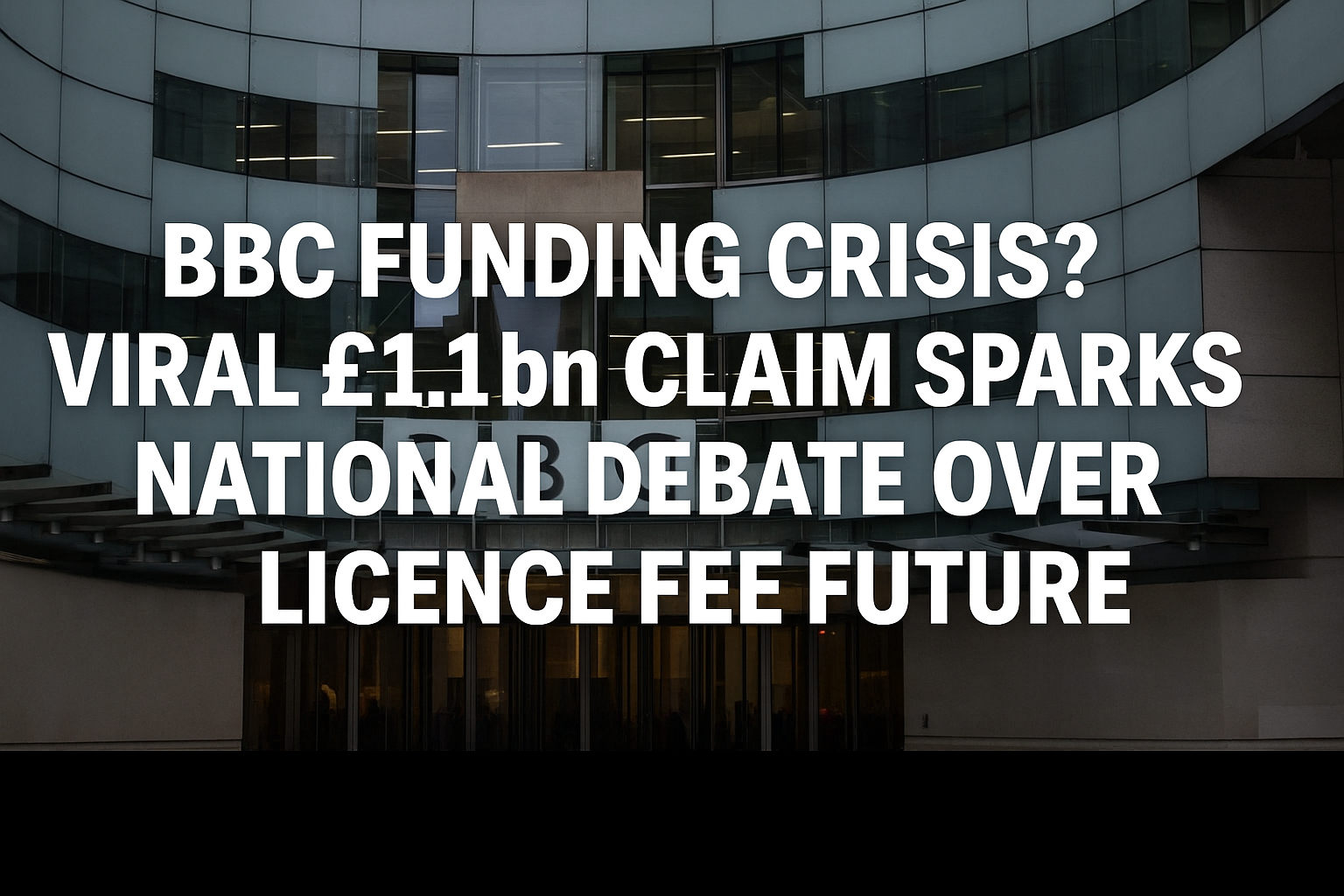
A dramatic claim circulating on social media—suggesting the BBC has “lost £1.1 billion” as millions refuse to pay the TV licence fee—has triggered intense public debate about the future of the broadcaster’s funding model. While the headline has gone viral, the figure itself is not supported by any official BBC financial report, raising important questions about misinformation, funding pressures, and the shifting media habits of UK households.
Despite the exaggerated nature of the £1.1bn claim, the conversation it has sparked is real, loud, and increasingly urgent: How should the BBC be funded in an era of streaming, subscription platforms, and political division?
Understanding the BBC’s Real Funding Landscape
The BBC remains one of the UK’s most significant public institutions, funded primarily through the licence fee—currently £169.50 per year for households watching live television or accessing BBC iPlayer. Its annual income from the licence fee stands at roughly £3.8 billion, according to the latest BBC Annual Report.
However, the organisation is undeniably under financial pressure. Factors affecting revenue include:
- A steady rise in licence fee evasion
- Shifting viewing habits toward subscription-based streaming
- Political debates about the fairness of the licence fee system
- A freeze on licence fee increases during periods of inflation
These pressures have led to efficiency drives, staff reductions, merging of news channels, and cost-cutting across various departments.
But even with these challenges, there is no official evidence that the BBC has suffered a sudden £1.1bn drop.
Where Did the £1.1bn Claim Come From?
The viral claim appears to stem from a misinterpretation—or manipulation—of older projections made by media analysts. At one time, it was estimated that if the licence fee were abolished, the BBC would face an annual shortfall of around £1 billion.
This was a theoretical scenario, not an actual loss.
On social media, however, such context is often lost, and eye-catching headlines can spread rapidly without verification. The speed at which the “£1.1bn loss” claim moved online illustrates how easily misinformation can gain traction, especially when it resonates with public frustration or political sentiment.
Are Millions Really Refusing to Pay the Licence Fee?
The truth is more nuanced. Licence fee non-payment has risen slowly over the years, but not dramatically. Estimates suggest that:
- 8–10% of UK households do not pay the licence fee
- This equals roughly 1.9 to 2.5 million households
- At maximum, this would account for a revenue loss of £350–£420 million, not £1.1 billion
While still significant, these figures do not match the scale of the viral claim. The rise in non-payment reflects broader trends:
- Younger audiences increasingly prefer streaming services
- Some households no longer watch live television at all
- Growing political resistance to mandatory funding
- Ongoing debates around BBC impartiality
The BBC has publicly acknowledged these patterns, but none equate to a billion-pound collapse.
Why the Debate Matters Now
The controversy arrives at a moment when the UK government is again reviewing the future of the licence fee. The discussion includes:
- Alternative funding models
- Possible reforms to enforcement
- Subscription-based options
- A hybrid licensing system
- Advertising-supported programming
Each option has major implications for the BBC’s independence, public service obligations, and long-term stability.
The viral £1.1bn claim has poured fuel onto this already sensitive national debate, strengthening arguments from both sides.
Arguments From Supporters of Scrapping the Licence Fee
- It’s outdated in a streaming-dominated world
- Households should not be criminalised for non-payment
- The BBC should be competitive like Netflix or Sky
- Funding should be voluntary, not compulsory
Arguments From Supporters of Keeping the Licence Fee
- It protects public service broadcasting
- Ensures independence from commercial and political influence
- Supports national journalism, education, arts, and regional programming
- Provides universal access regardless of income
The clash between these viewpoints has intensified, making 2025 one of the most important years for the BBC’s future direction.
The Role of Misinformation in the Crisis Narrative
Regardless of political opinion, what stands out most in this story is how a misleading claim can shape national sentiment. The £1.1bn figure went viral not because it was accurate, but because it sounded dramatic, plausible, and aligned with existing frustrations.
This highlights a critical issue: public trust in media institutions is being shaped increasingly by unverified online narratives rather than official reports or reliable data.
The BBC itself has become both a subject of misinformation and an organisation responsible for fighting it. Ironically, this latest viral claim shows how vulnerable even major broadcasters are to online distortion.
What Happens Next?
As the government’s review continues, several outcomes are possible:
- The licence fee may be replaced by a household broadcasting levy
- A subscription-based BBC iPlayer model may emerge
- A hybrid funding system could combine public funds and advertising
- Or the licence fee could remain but with updated enforcement rules
Whatever the final decision, the debate is far from over. The public response to the viral claim demonstrates that the BBC’s funding future is no longer just a political or financial question—it’s a cultural one.
Millions of UK residents feel invested in what happens next, whether they support the licence fee or want it scrapped altogether.