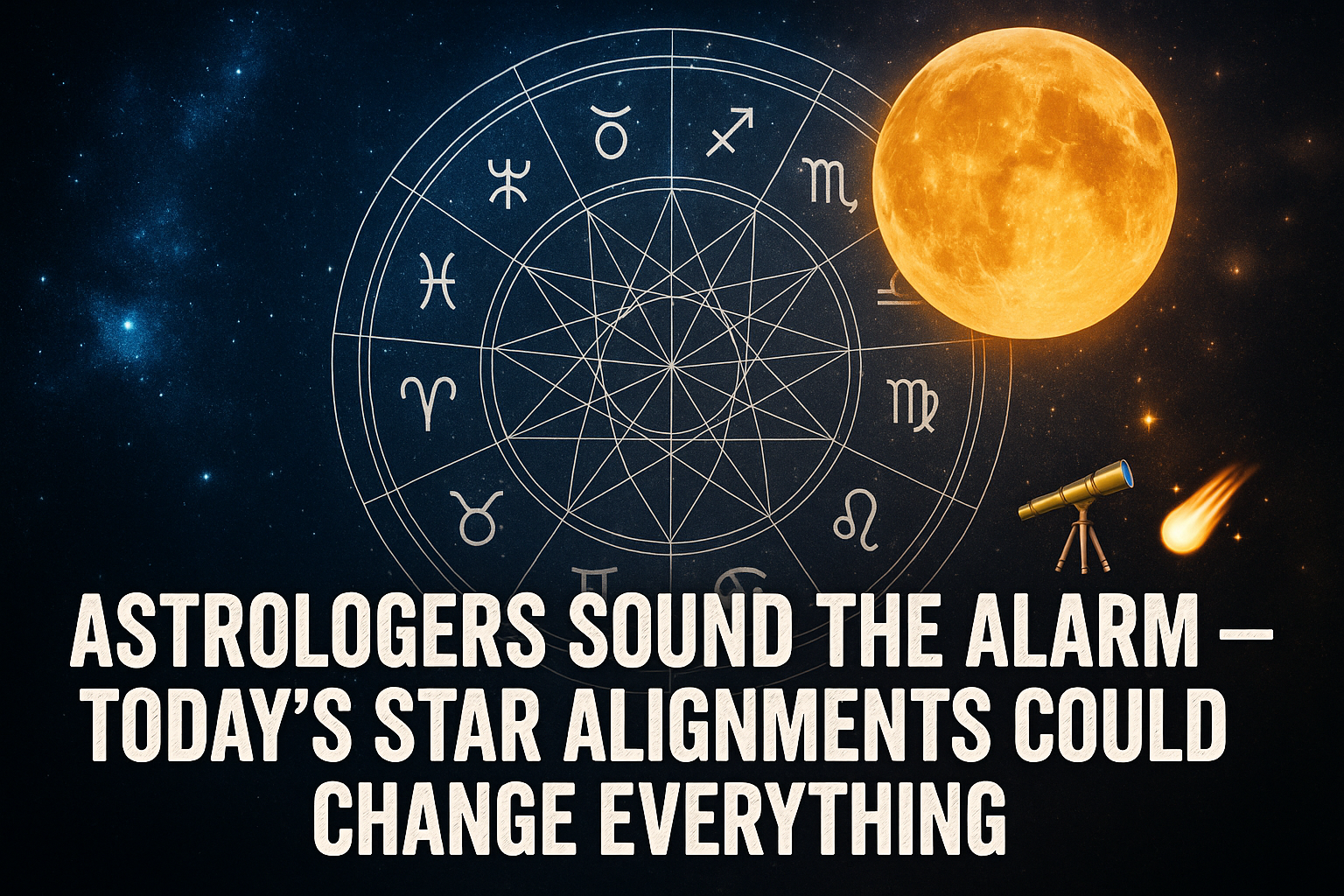
Every morning, millions of people across the UK open their phones to read their daily horoscope — searching for clues, warnings, or comfort in what the stars might reveal. Today’s astrology headlines are especially dramatic: “Astrologers Sound the Alarm — Today’s Star Alignments Could Change Everything.” It’s the kind of bold, cosmic declaration that instantly sparks curiosity. But what does it actually mean? And more importantly — how does it hold up against scientific evidence?
This article breaks down the truth behind today’s so-called “astrological alarm,” why horoscopes feel so compelling, and the psychological forces that make people swear their zodiac predictions are accurate, even when research says otherwise.
What Today’s ‘Astrological Alarm’ Really Means
Astrology columns — such as the one published daily in the Evening Standard — often use heightened language to capture attention: big energy shifts, cosmic warnings, emotional shake-ups, or critical decisions approaching. These forecasts take the positions of the Sun, Moon, and planets and translate them into symbolic narratives for each zodiac sign.
On days when astrologers claim that “everything could change,” it usually refers to:
- A major planetary transit (like Mars clashing with Pluto)
- A New or Full Moon signalling emotional release or new beginnings
- A planet moving into a new zodiac sign
- A cluster of planets creating heightened “energy”
But here’s the important part: there is no astronomical or physical event occurring today that poses any measurable impact on human behaviour or life events. Instead, it’s the astrological interpretation — not the science — that creates the sense of urgency or emotional weight.
The Science: Do the Planets Actually Affect Your Day?
Despite astrology’s enormous cultural popularity, especially on social media, scientific research consistently finds no evidence that planetary positions influence personality, fate, or daily outcomes.
Multiple controlled studies and meta-analyses have concluded:
- Astrological predictions perform no better than chance
- Astrologers cannot accurately match birth charts to personality profiles
- Identical charts do not produce identical life outcomes
- There is no known physical mechanism by which distant planets could affect daily life
The most famous scientific test — a double-blind experiment published in Nature — showed that astrologers matched charts to psychological profiles with the same accuracy as random guessing.
In short: from a scientific standpoint, today’s “cosmic warning” is symbolic, not literal.
So Why Do Horoscopes Feel So Accurate?
If the science says astrology doesn’t work, why do millions of people insist it does?
That’s where psychology comes in — and this part is fascinating.
1. The Barnum (Forer) Effect
People naturally respond strongly to statements that feel personal but are actually vague enough to apply to almost everyone.
For example:
“You’ve been feeling misunderstood lately but trying to stay strong.”
This could apply to almost anyone on almost any day — yet when phrased as “your horoscope,” people interpret it as tailor-made.
2. Confirmation Bias
We’re wired to:
- Notice what fits our expectations
- Ignore what doesn’t
- Remember the “hits”
- Forget the “misses”
If one line of your horoscope matches your mood, you instantly rate the whole reading as “accurate.”
3. Emotional Resonance
People read horoscopes when they feel:
- uncertain
- stressed
- indecisive
- curious
- hopeful
Astrology offers narrative clarity and emotional comfort — a sense that the universe cares or that life has patterns, not chaos.
4. Identity & Belonging
Zodiac signs are cultural identity markers, especially online.
“What’s your sign?” builds instant connection, especially among Gen Z and young adults.
Horoscopes feel like:
- personality guides
- reflection prompts
- shared humour and meme culture
- a community language
This social value remains powerful even when the scientific case collapses.
Why Media Loves Dramatic Horoscope Headlines
Lifestyle outlets know one thing very well: horoscopes equal engagement.
Astrology content performs exceptionally well on:
- Instagram Reels
- TikTok
- Snapchat
- Google Discover
Why?
Because it offers a blend of:
- entertainment
- emotional relatability
- identity affirmation
- soft advice
- conversation starters (“This is SO me.”)
A headline like “Astrologers Sound the Alarm — Today Could Change Everything” triggers curiosity, even among people who don’t fully believe in astrology.
It’s not deception — it’s storytelling, and audiences instinctively understand it as such.
Astrology as a Reflection Tool, Not a Prediction System
Even though astrology lacks scientific verification, that does not mean it has zero value.
Modern psychology recognises that:
- Journaling
- Reflection prompts
- Guided interpretation
- Symbolic meaning-making
- Identity exploration
…can all improve mental clarity and emotional well-being.
Horoscopes essentially act as daily reflection prompts, wrapped in cosmic symbolism.
People don’t follow them because they’re “true” in a scientific sense — they follow them because they’re useful, fun, and often emotionally validating.
Conclusion: The Alarm Isn’t Scientific — It’s Symbolic
Today’s horoscope “warning” isn’t a literal cosmic emergency.
There is no astronomical event altering human life today.
But astrologers — and lifestyle editors — use dramatic language to encourage self-reflection, stir emotion, and engage readers.
The real impact of today’s horoscope won’t come from the planets.
It will come from how you interpret the message, reflect on it, and use it as a moment to check in with yourself.
Astrology may not be science, but it remains one of the most enduring and powerful forms of modern storytelling — and that is why headlines like today’s continue to captivate millions.