Introduction
Hundreds of residents of Crowborough have taken to the streets in a dramatic protest against the UK government’s plan to house up to 600 single male asylum seekers at the nearby military site known as Crowborough Training Camp. The demonstration reflects mounting local opposition to asylum-accommodation policies as communities across Britain question the impacts of rapid relocation.
What’s happening & why
- The Home Office announced in October 2025 that it would repurpose military sites including Crowborough Training Camp and Cameron Barracks in Inverness to house asylum seekers. The plan aims to move hundreds of male asylum applicants off the hotel-based system and into barracks-style accommodation. The Guardian+1
- At Crowborough, local campaigners say up to 600 individuals could be accommodated at the site, which is normally used for cadet units and training by the Ministry of Defence (MoD). ITVX+1
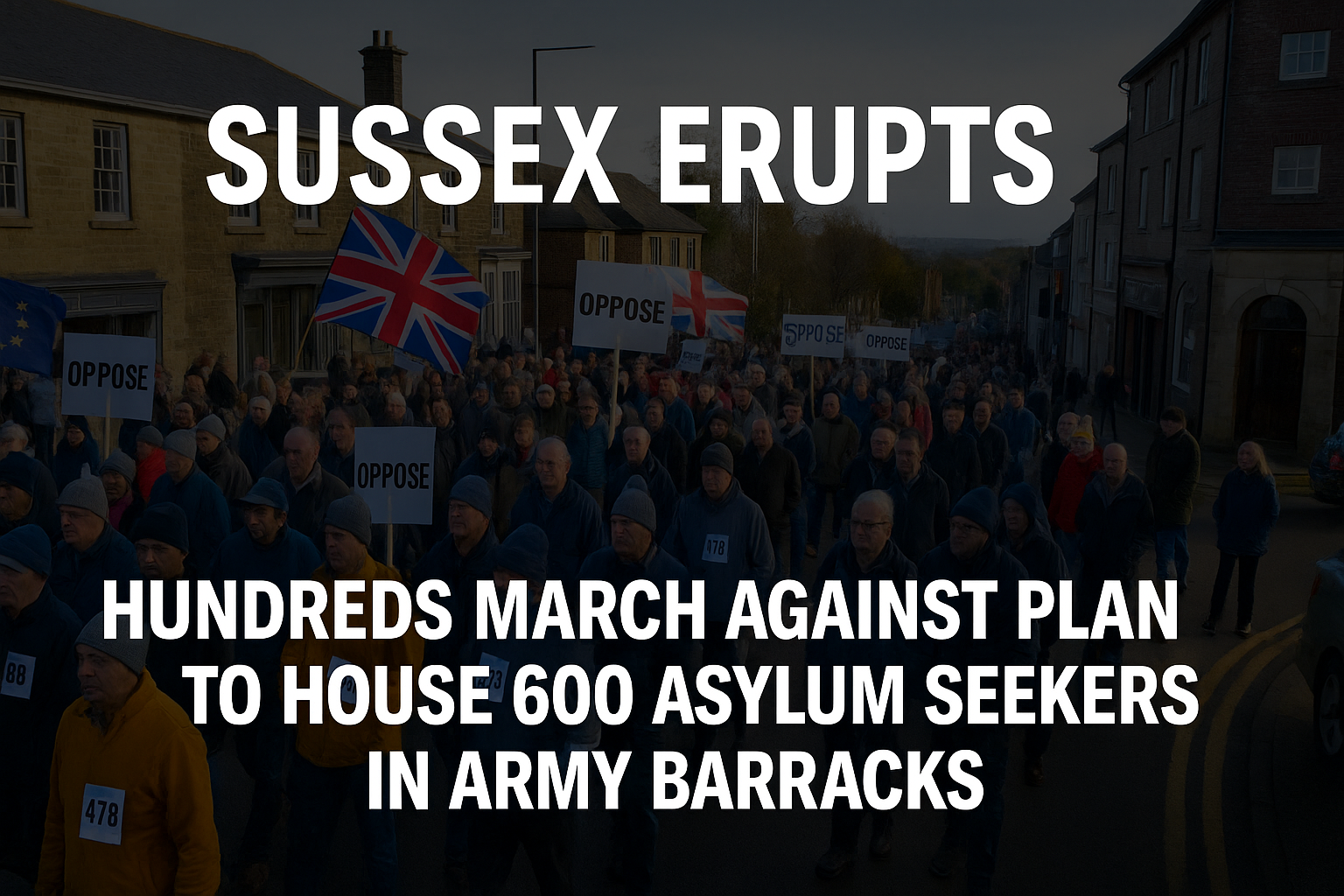
- On Sunday (date), an estimated 800 people marched through the town centre with placards and flyers. Some other local outlets estimate up to 2,000 or more protesters. ITVX+2The Times+2
The protest – what locals are saying
- Marchers displayed slogans such as “Protect our town – protect our children” and “Home Office think again”, and many wore numbered badges (one per planned asylum-place) to symbolise their count of 600. GB News+1
- Key concerns raised by residents:
- Lack of consultation: Many locals say they learnt about the plan via media leaks, not proper local engagement. GB News+1
- Safety & community impact: Anxiety about single male asylum seekers being housed near a rural town, near training grounds and cadet units, raising questions about policing, local services and cadet safety. The Times+1
- Service capacity: Residents worry that local GP surgeries, schools and infrastructure are already stretched. The Times
- A local grassroots group, Crowborough Shield, is leading the campaign and has pledged to explore legal options if the plan proceeds without proper safeguards. The Times
Government & official response
- A Home Office spokesperson said the move to military sites is part of a broader strategy to phase out expensive and chaotic hotel-based accommodation for asylum seekers, emphasising that public safety remains the “first priority”. ITVX+1
- The MoD confirmed it is working with the Home Office to assess the impact on cadet units and training operations at Crowborough Training Camp. The Sun+1
- Local government: Wealden District Council (the local authority) voted unanimously in opposition to the proposals and said it will explore legal action if the site is used without full consultation. ITVX+1
Why this matters
- Policy shift: The use of military bases for asylum accommodation represents a notable change in UK government policy, increasing emphasis on “proof of concept” sites away from hotel use. Financial Times
- Local vs national tension: The Crowborough situation illustrates the friction between national asylum policy (managing costs, reducing hotel use) and local community concerns (safety, services, consent).
- Narrative & sentiment: This protest is part of a broader wave of localized demonstrations around the UK connected to asylum and migration issues — demonstrating the political salience of how and where asylum seekers are housed. Wikipedia
What happens next
- According to the Home Office timeline, the camp is expected to be ready for use by end of November or early December 2025, though protesters question whether that timeline is realistic or appropriately consulted. ITVX+1
- Further protests are already being organised by local groups. GB News
- Legal challenges may be filed if the local authority and campaigners believe consultation obligations or safety assessments were not properly fulfilled.
Conclusion
The scene in Crowborough underscores the complexity of the asylum-housing issue in the UK: on one hand, the government’s strategy to reduce reliance on hotels by moving asylum seekers to military or industrial sites; on the other, local communities wrestling with concerns about consultation, safety, capacity and identity. The protest in Crowborough is less a fringe affair and more a flashpoint in the broader debate over how and where Britain accommodates people seeking asylum and how localities adopt or resist those decisions.